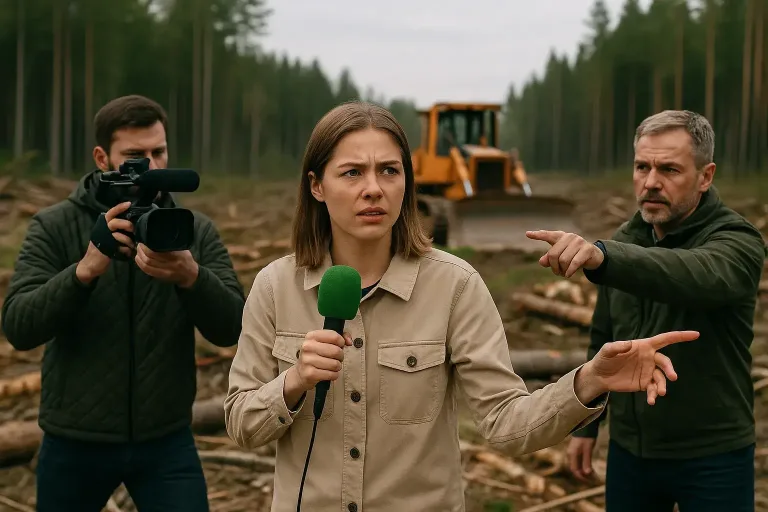
Teaching Environmental Journalism in Naberezhnye Chelny: A Practical Guide to Eco-Friendly Reporting and Community Engagement
Why teach environmental journalism in Naberezhnye Chelny?
Naberezhnye Chelny is a city of industry, rivers and communities — home to large manufacturers and bordered by the Kama River. These features create both environmental challenges and rich storytelling opportunities. Teaching environmental journalism here builds local capacity to document air and water quality, waste and land-use issues, and the human stories behind them — while promoting eco-friendly practices in schools, newsrooms, and community projects.
Learning objectives
— Understand core environmental science concepts relevant to urban-industrial settings (air, water, soil, biodiversity, waste).
— Learn journalism skills: reporting, interviewing, ethical investigative methods, data journalism, multimedia production.
— Practice community-centered and solutions-focused reporting.
— Adopt eco-friendly production practices for reporting and events.
— Build partnerships with local stakeholders (municipal services, industry, universities, NGOs).
Suggested course structure (8–12 weeks)
Week 1: Introduction
— Overview: why environmental journalism matters locally.
— Map local issues: industry emissions, river health, green spaces, waste management.
Week 2: Basics of environmental science
— Air and water quality fundamentals; how to read reports and tests.
Week 3: Journalism fundamentals
— Sourcing, interviewing, verification, FOI requests basics (local laws).
Week 4: Data and multimedia skills
— Collecting and visualizing data (spreadsheets, simple mapping).
Week 5: Investigative and solutions journalism
— How to trace pollution sources and report constructive solutions.
Week 6: Fieldwork and citizen science
— Using sensors, water tests, photo and audio documentation.
Week 7: Workshop — storytelling formats
— Short articles, photo essays, radio pieces, short video, Telegram threads.
Week 8: Ethics, safety, and legal considerations
— Safety near industrial sites, consent, and legal context for Russian media.
Weeks 9–12: Capstone projects & publication
— Student teams investigate a local issue, produce a multimedia package, and present findings to the community.
Practical lesson and activity ideas
— River watch: Monitor a stretch of the Kama River — document pollution sources, interview fishermen and recreation users, gather water samples with partner labs.
— Air-sensor network: Deploy low-cost PM sensors (citizen-science kits) at schools and compare to official data; create a live dashboard or Telegram updates.
— Industrial beat: Profile a factory’s environmental management and CSR; analyze public emissions data and permits; interview workers and managers.
— Waste audit: Conduct an audit of a school or neighborhood’s waste stream and produce a community guide to reduction and recycling.
— Green solutions feature series: Report on rooftop gardens, urban greening projects, energy-efficiency efforts and local entrepreneurs.
Eco-friendly course practices
— Digital-first materials; minimize printed handouts; if printing is necessary, use recycled paper and double-sided printing.
— Hold fieldwork with reusable kits (metal sample bottles, cloth bags), reduce one-use plastics.
— Favor low-energy venues and schedule classes during daylight.
— Use local sustainable catering at events (seasonal produce, minimal packaging).
— Offset travel by encouraging walking, cycling or group transit for field trips.
Partnerships and local engagement
— Municipal departments: environmental committee, waste management, public health — for data, permissions, and joint events.
— Industry: approach large employers (e.g., plant CSR departments) for site visits, data sharing, and sponsorship of community monitoring — while maintaining editorial independence.
— Universities and colleges in Tatarstan: for technical support, lab access, and guest lecturers.
— Local media and Telegram channels: publish student work and reach residents quickly.
— Community groups and schools: run joint workshops, invite local residents to propose reporting topics.
Tools and resources (low-cost and accessible)
— Data collection: spreadsheet software, Google Forms, KoboToolbox for surveys.
— Mapping & visualization: QGIS (open source), Google My Maps, simple charts (Excel).
— Sensors: low-cost PM sensors (e.g., PurpleAir equivalents), portable water test kits; coordinate with university labs for chemical analyses.
— Multimedia: smartphone cameras for photo/video; free audio editors (Audacity); simple video editors (OpenShot, Shotcut).
— Platforms: Telegram, VK, local radio, school websites — tailor to where residents get information.
Teaching tips & pedagogy
— Project-based learning: prioritize real local investigations that produce publishable work.
— Mentorship: pair students with local journalists, scientists, or community leaders.
— Safety-first: teach site safety, use permits for industrial access, and have clear risk assessments for fieldwork.
— Ethics and independence: discuss conflicts of interest (especially when partnering with industry) and the need for transparent sourcing.
— Evaluate by impact: number of published reports, community responses, policy follow-ups, sensor network coverage, and student portfolios.
Sample outputs students can produce
— Local investigative article on emissions or river contamination.
— Multimedia package: article + photo essay + short video + Telegram thread.
— Community reporting toolkit: how-to for neighbors to monitor air/water.
— Infographics and data visualizations for local councils.
— Public workshop or exhibition showcasing findings and practical eco-solutions.
Funding and sustainability ideas
— Apply for local government or cultural grants, municipal project funds, or education ministry programs.
— Seek CSR partnerships with local companies for equipment or lab access — with clear editorial boundaries.
— Small participant fees or crowd-funded support for community events.
— Collaborate with university research grants or student internships.
Measuring success
— Outputs produced and published locally.
—