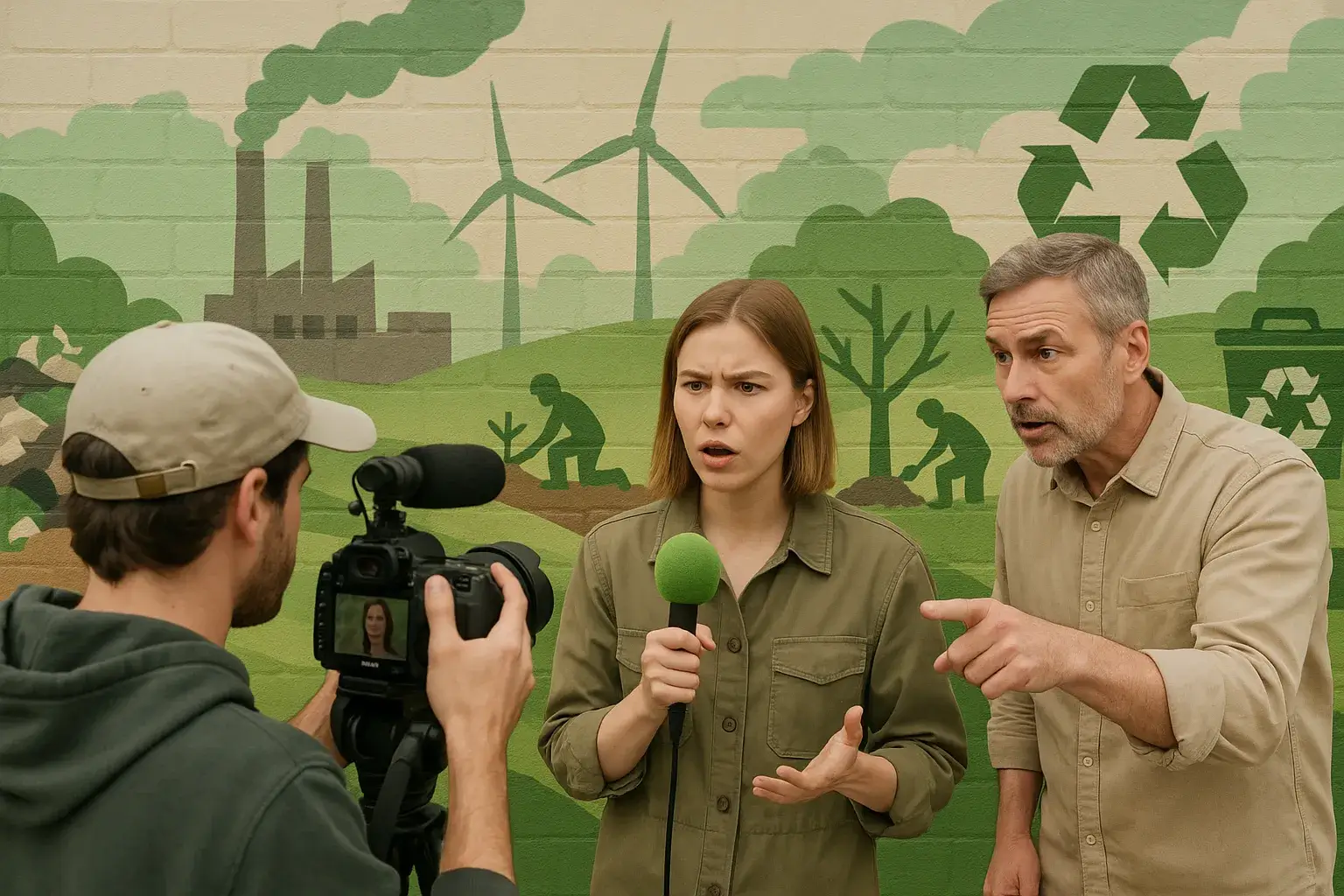
Teaching Environmental Journalism and Promoting Eco-Friendly Practices in Naberezhnye Chelny
Why environmental journalism matters in Naberezhnye Chelny
Naberezhnye Chelny is an industrial hub on the Kama River with a large manufacturing base (notably KamAZ) and dense urban neighborhoods. That combination creates urgent local stories about air and water quality, industrial impacts, green space, and community health. Teaching environmental journalism here does more than train reporters — it builds civic capacity, empowers residents to demand accountability, and helps local decision-makers design better environmental policy.
Goals for a local program
— Train journalists and communicators to research, verify and tell accurate environmental stories.
— Build community awareness and participation in environmental monitoring and solutions.
— Encourage eco-friendly working practices among media and students.
— Create sustained partnerships between media, universities, NGOs and industry to improve transparency.
Core curriculum (modular, 8–12 weeks)
1. Introduction to environmental systems and local context
— Basics: air, water, soil, ecosystems, industrial pollution
— Local profile: Naberezhnye Chelny’s industrial landscape, the Kama River, municipal services
2. Data literacy and science communication
— Reading scientific reports and environmental impact assessments
— Basic statistics, charts, and mapping for journalists (QGIS/Google Maps)
— Open data sources: Rosprirodnadzor regional reports, municipal data portals
3. Reporting methods and ethics
— Interviewing scientists, officials and affected residents
— Identifying conflicts of interest and corporate PR
— Source verification and handling contested science
4. Investigative and solutions reporting
— Tracing supply chains, permits and emissions records
— Cost-benefit framing of policy options and technologies
— Solutions journalism: what works locally and why
5. Multimedia storytelling
— Field audio/video, podcasts, and short documentary techniques
— Photojournalism for environmental stories
— Social media strategies for engagement
6. Citizen science and participatory reporting
— Designing low-cost monitoring (air sensors, water sampling) with community teams
— Crowdsourcing, data validation and small-scale campaigns
7. Sustainability in newsroom practice
— Reducing carbon footprint of reporting (travel, printing, servers)
— Sustainable event planning and material use
8. Capstone community project
— Local investigative feature, multimedia package, or sustained beat reporting plan
Teaching methods and learning activities
— Field trips: river sampling at Kama River, visits to monitoring stations, walk-and-talks in industrial districts.
— Hands-on labs: deploy and calibrate low-cost PM2.5 sensors; simple water turbidity and pH tests.
— Simulations: mock press conferences with municipal officials and industry reps.
— Mentored reporting: pair students with local editors or NGO communicators.
— Public showcase: present projects at city libraries, local festivals or school events.
Project ideas tailored to Naberezhnye Chelny
— Air quality beat: map PM2.5/NOx variation across neighborhoods, link to health data.
-Kama River watch: microplastic counts, nutrient runoff, changes in biodiversity across seasons.
-Industrial transparency dossier: analyze permits, emissions reports and compliance records for local plants.
-Green spaces audit: tree canopy and playground conditions in different districts.
-Waste management story: household recycling practice, municipal collection efficiency, informal recycling economy.
-Transport and emissions: profile commuting patterns and potential for low-emission public transport.
Eco-friendly practices for journalists and classrooms
— Prioritize digital reporting and remote interviews when possible.
— Minimize single-use plastics on field shoots; pack reusable gear.
— Use energy-efficient equipment and cloud services with green providers.
— Print only final copies; share drafts electronically.
— Organize carpools or public transport for fieldwork; offset unavoidable travel.
— Reuse and recycle teaching materials; favor local suppliers.
Partnerships and local resources
— Local universities and vocational colleges for teaching space, students and faculty mentors.
— Environmental NGOs and community groups for access to monitoring projects and volunteers.
— Municipal departments (environment, urban planning) and regional Tatarstan ecology bodies for data and official contacts.
— Industry (e.g., major manufacturers) for access and corporate social responsibility cooperation — but maintain editorial independence.
— Libraries, cultural centers and schools for public presentations and recruitment.
— Rosprirodnadzor and regional statistical services for official environmental data.
Funding and sustainability of the program
— Apply for municipal education and civic engagement grants.
— Seek small grants from regional foundations or corporate CSR programs (with transparency about editorial independence).
— Offer short paid workshops for local media and NGOs.
— Crowdfund community monitoring projects and public-interest reporting series.
Assessing impact
— Quantitative: number of trained journalists, stories published, sensor deployments, public events, audience reach.
— Qualitative: evidence of policy change, improvements in municipal service delivery, community behavior shifts.
— Media metrics: depth and accuracy of reporting, sustained beats created, follow-ups from authorities.
Challenges and risk management
— Access to reliable official data can be limited — cultivate multiple data sources and document gaps.
— Safety on industrial reporting: train for PPE, coordinate with employers for access, follow safety rules.
— Potential pressure from powerful local interests: establish editorial safeguards, legal advice and ethical codes.
— Ensure community projects are inclusive, avoiding blame and amplifying resident voices.
Quick-start checklist for educators and organizers
— Map local stakeholders and potential partners.
— Design a 6–8 week pilot module with a small cohort (10–20 participants).
— Secure one or two field-monitoring kits (air sensor, basic water test kit).
— Line up mentors from local media/NGOs and at least one scientist or environmental expert.
— Plan a public-facing capstone to demonstrate impact.
Final note
Environmental journalism in Naberezhnye Chelny can bridge technical knowledge and everyday experience, turning complex environmental challenges into clear, actionable stories. By combining hands-on monitoring, rigorous data skills and community engagement, a local program will not only educate journalists but also equip residents and decision-makers to protect the city’s environment and public health.